
Dental implant recovery means protecting the surgical site while the gums heal and the jawbone gradually bonds to the implant. Follow your surgical team’s instructions for cleaning, food, medication, and activity, and keep follow-up visits before returning to unrestricted chewing, even if your mouth feels comfortable.
If you have questions about healing after dental implant treatment, understanding your follow-up plan can help you protect the implant. Walden Dental in Austin, TX can help you understand your recovery instructions and when to resume normal activities.
Key Takeaway: Your pain may improve before your implant is ready for normal chewing forces. Keep your recovery restrictions until your dental team confirms when you can advance your diet and activity.
Table of Contents
- What Determines Your Dental Implant Recovery Timeline?
- How to Protect the Surgical Site During Recovery
- What to Eat and When to Resume Activity
- Which Symptoms Need a Dental Call or Emergency Care?
- Plan Follow-Up Visits, Time Off, and Recovery Costs
- Move Toward Your New Smile at a Pace That’s Right for You
- FAQs
What Determines Your Dental Implant Recovery Timeline?
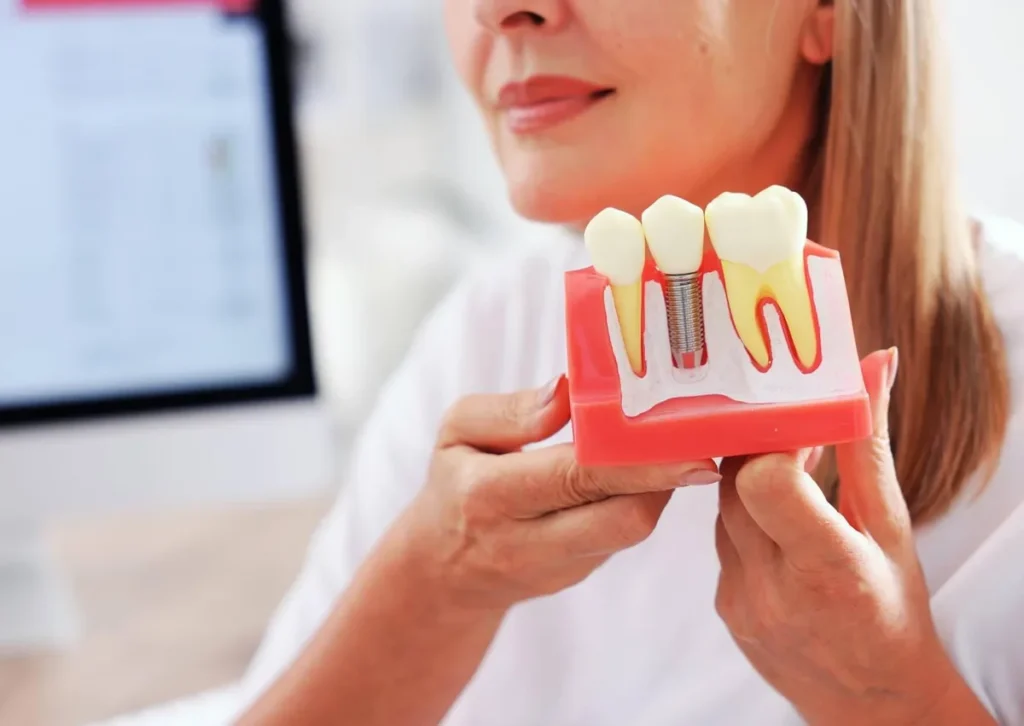
An implant is a post placed in the jaw to support a replacement tooth. After placement, the gum tissue heals while the surrounding bone gradually attaches to the implant through a process called osseointegration.
Bone integration takes several months, but there is no single waiting period that applies to every implant. The timing of chewing forces, also called loading, depends on implant stability, the procedure, and your dentist’s treatment plan, not simply how much pain you feel.
An extraction, bone graft, sinus procedure, or placement of multiple implants may require additional restrictions or separate healing stages. Nicotine use, poorly controlled diabetes, gum disease, and certain medications can also complicate healing.
Give your surgeon an updated health history and medication list. Do not stop prescribed medication without guidance from the prescribing clinician.
|
Recovery Stage |
What Is Happening |
What Guides the Next Step |
|---|---|---|
|
Early surgical healing |
The incision and surrounding tissues begin repairing |
Bleeding control, symptom changes, and surgical instructions |
|
Gum healing |
The tissue closes and becomes less tender |
Examination of the site and any stitches |
|
Bone integration |
Bone gradually attaches to the implant |
Implant stability, clinical assessment, and imaging when indicated |
|
Restoration and loading |
A temporary or final tooth is fitted or adjusted |
The treatment plan and the chewing forces the implant can tolerate |
Early recovery focuses on controlling bleeding, managing discomfort, and protecting the incision. As symptoms improve, cleaning and food choices may change, but only according to your team’s instructions.
A temporary tooth does not necessarily mean the implant can tolerate normal chewing. Ask whether it must stay out of contact with opposing teeth or follow other loading restrictions.
How to Protect the Surgical Site During Recovery
Your discharge instructions take priority because implant procedures differ. If instructions are unclear or conflict with advice you have read elsewhere, call the treating office before changing your care.
- Control bleeding as instructed. Use gauze and pressure according to your surgical team’s directions, and avoid repeatedly disturbing the site to inspect it.
- Manage discomfort safely. Use prescribed or over-the-counter pain medicine only as directed and appropriate for your health history; ask your dentist or pharmacist about interactions and duplicate ingredients.
- Limit swelling. If recommended, use a cold pack wrapped in cloth according to your team’s schedule, and rest with your head elevated if advised.
- Clean without injuring the incision. Continue cleaning unaffected teeth, but ask when and how to brush near the implant; use rinses only as directed and avoid forceful rinsing or spitting during early healing.
- Avoid irritation and nicotine. Do not poke the wound with your tongue, fingers, or cleaning tools, and ask your care team for help avoiding smoking, vaping, and other nicotine products.
Pro Tip: Before leaving, confirm 3 details: how to clean the site, what to do if bleeding continues, and how to reach the surgical team after hours. Keep the written instructions where you or your caregiver can find them.
What to Eat and When to Resume Activity
Choose soft foods that require little chewing, such as scrambled eggs, yogurt, soft fish, or mashed vegetables. Maintain fluids and adequate nutrition, including protein, rather than relying only on sweet drinks or foods with little nutritional value.
Avoid hard, crunchy, sticky, or sharp foods that could injure the incision or stress the implant. While your mouth is numb, avoid hot foods and drinks and take care not to bite your lip or cheek.
Chewing on the opposite side may help when your dentist permits it, but this does not replace loading restrictions. If you have implants on both sides or a full-arch temporary restoration, ask for a specific food plan and clear criteria for adding firmer foods.
Rest after surgery and avoid strenuous exercise, heavy lifting, and bending for the period your surgeon recommends. Return-to-work timing depends on the extent of surgery, your symptoms, sedation, and whether your job involves physical exertion.
Watch Out: Less pain is not clearance for heavy lifting or hard foods. Follow your activity and chewing restrictions until your dental team advises that you can advance them.
Which Symptoms Need a Dental Call or Emergency Care?
Tenderness, swelling, bruising, and light blood-tinged saliva can occur after surgery. Symptoms may change during early healing, but they should improve overall rather than continue worsening.
Contact your dental surgeon promptly for:
- Pain or swelling that is severe, worsening, or returns after improving.
- Fever, pus, or an unpleasant taste accompanied by increasing discomfort.
- Bleeding that does not settle with the pressure measures you were given.
- Persistent or new numbness, tingling, or altered sensation after the expected anesthetic effect has worn off.
- An opening incision, a loose temporary tooth, or anything that feels mobile at the implant site.
If you cannot reach your surgeon, seek urgent dental care for these concerns. Do not wait for a routine follow-up appointment if symptoms are getting worse.
Do not wiggle an implant or restoration to test it. A dentist needs to determine whether movement involves the restoration, a connecting component, or the implant itself.
Seek emergency care for difficulty breathing or swallowing, rapidly spreading facial or neck swelling, or heavy uncontrolled bleeding. Call 911 if symptoms threaten your airway or bleeding is accompanied by faintness or serious illness.
Plan Follow-Up Visits, Time Off, and Recovery Costs

Follow-up visits let your dental team assess tissue healing, check the restoration, and decide when the implant can bear more chewing force. Feeling well is not a reason to skip these checks.
Before surgery, arrange transportation if sedation is planned and follow the team’s instructions about supervision, driving, and work. Prepare suitable food and discuss job restrictions before committing to a return date.
Ask the office which postoperative visits, imaging, temporary-tooth adjustments, and final restoration services are included in your treatment estimate. If you have dental insurance, confirm benefits, exclusions, and possible out-of-pocket costs with the office and insurer; coverage is not guaranteed.
Move Toward Your New Smile at a Pace That’s Right for You
Base your next step on your procedure and examination, not a generic recovery deadline. At each follow-up, ask what you can change now and which restrictions still apply.
If you have questions about your implant recovery, a follow-up visit can help you understand your next steps. For dental implant care in Austin, TX, call Walden Dental at +1 512-337-8560 to schedule an appointment.
FAQs
How long does dental implant recovery take?
Surgical discomfort and gum healing follow a different schedule from bone integration, which can take several months. Your surgeon can estimate your timeline based on implant stability, grafting, health factors, and the planned restoration.
Can I work after dental implant surgery?
You may need time away from work depending on sedation, discomfort, and physical job demands. Ask your surgical team for individualized restrictions, especially if you drive, operate equipment, or lift heavy objects.
Does less pain mean my implant has healed?
No. Reduced pain does not confirm that bone has bonded sufficiently to the implant, so keep dietary restrictions and follow-up appointments until your dentist advises otherwise.
What if my temporary tooth feels loose?
Contact your dental team promptly and avoid chewing on it. Do not try to tighten, glue, or adjust it yourself.