
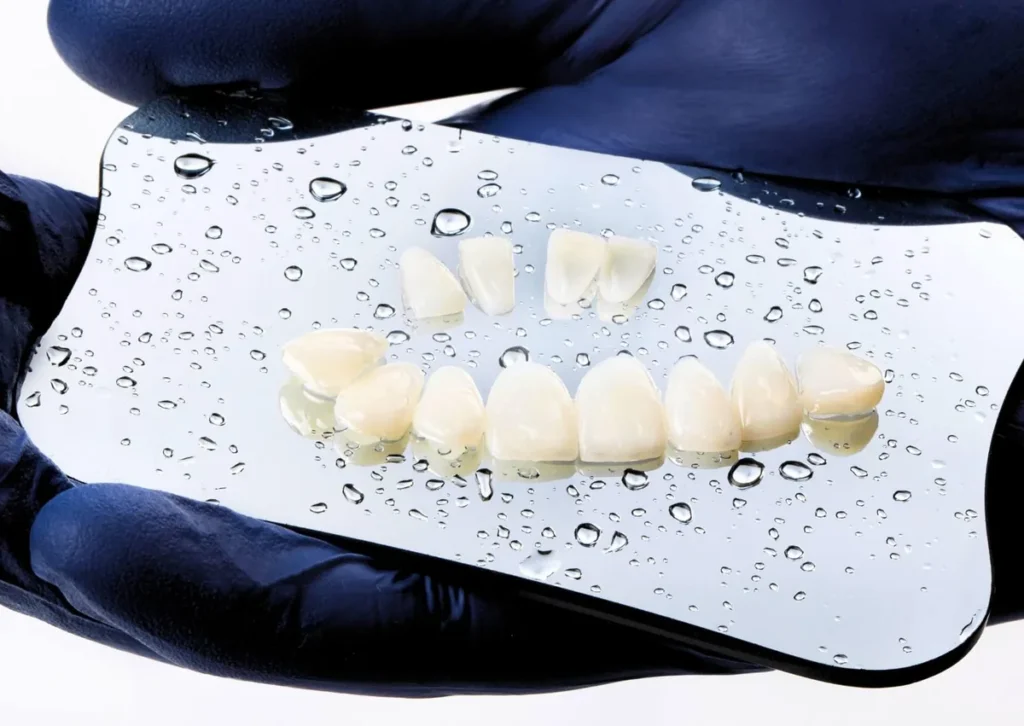
Veneers generally suit mostly healthy front teeth that need cosmetic changes, while crowns may be appropriate when substantial damage or large fillings weaken a tooth. Both can improve appearance, but crowns usually require more tooth removal. When comparing crowns vs. veneers for front teeth, start with the tooth’s condition and your bite, not appearance alone.
Walden Dental provides dental crowns and veneers to help patients in Austin, TX address dental concerns and achieve their desired smile results. Our team offers personalized guidance to help you understand which option may be more suitable for your teeth, oral health, and goals.
Key Takeaway: Your remaining tooth structure, enamel, and bite help determine whether a veneer or crown is appropriate. Ask your dentist which option meets your goals while preserving as many healthy teeth as possible.
Table of Contents
- Crowns vs. Veneers for Front Teeth: The Main Differences
- Which Front-Tooth Problems Favor Each Option?
- What the Examination and Treatment Plan Should Include
- Preparation, Tooth Appearance, and Comfort Trade-Offs
- How Long Do Crowns and Veneers Last?
- Costs and Insurance: Compare the Full Treatment Plan
- Make Confident Choices for a Healthier, More Beautiful Smile
- FAQs
Crowns vs. Veneers for Front Teeth: The Main Differences
A veneer is a thin covering bonded mainly to the front surface of a tooth, sometimes extending over the biting edge. A crown surrounds the prepared tooth, covering its front, back, and sides.
This difference affects how much tooth structure must be removed and how the restoration handles force. Veneers rely heavily on a durable bond, particularly to enamel. Crowns provide broader coverage but still need sufficient sound tooth structure for support.
|
Decision Factor |
Veneer |
Crown |
|---|---|---|
|
Main purpose |
Change the appearance of a mostly healthy tooth |
Restore the shape and function of a compromised tooth |
|
Coverage |
Mainly the visible front surface |
Surrounds the prepared tooth |
|
Tooth preparation |
Usually less extensive |
Usually more extensive |
|
Common reasons to consider |
Discoloration, small chips, minor shape changes |
Extensive damage, large fillings, selected fractures |
|
Main limitation |
Less suitable when enamel or supporting tooth structure is inadequate |
Removes more tissue and does not prevent every fracture |
|
Future care |
May need repair or replacement |
May need repair or replacement |
Decay, gum disease, and infection must be evaluated and addressed as part of the treatment plan. A restoration may help rebuild a tooth after treatment, but placing a covering is not a substitute for managing underlying disease.
Which Front-Tooth Problems Favor Each Option?
Mostly Healthy Teeth With Cosmetic Concerns
Dental veneers may be appropriate for persistent discoloration, minor chips, uneven shapes, or small gaps when enough healthy enamel remains. They change the visible surface without surrounding the entire tooth.
However, a veneer is not always the most conservative solution. Whitening may address color, composite bonding may repair a small chip, and orthodontic treatment may correct alignment without removing healthy tooth structure to create the appearance of straightness.
Teeth With Significant Structural Damage
A crown may be more appropriate when a front tooth has a large filling, extensive loss of tooth structure, or certain fractures. Its broader coverage can restore shape and protect vulnerable remaining structure. The location and depth of damage still affect whether the tooth can be restored predictably.
A front tooth does not automatically need a crown because it has had root canal treatment. Remaining tooth structure, existing restorations, and bite forces help determine which restoration is needed.
Teeth With Severe Discoloration or Bite Problems
Severe discoloration may require a material or design that masks the underlying color, but color alone does not automatically justify a crown. The dentist should balance the desired shade against the amount of healthy teeth that would need to be removed.
Grinding, clenching, a deep bite, or edge-to-edge contact can place substantial force on either restoration. These factors may call for changes to the restoration design, orthodontic assessment, or a protective appliance rather than simply a thicker restoration.
Watch Out: Choosing crowns for healthy front teeth based only on appearance can mean unnecessary tooth removal. Before irreversible preparation, ask whether any of these 3 alternatives could address your concern: whitening, bonding, or orthodontic treatment.
What the Examination and Treatment Plan Should Include
A useful consultation separates the appearance you want from the treatment your teeth can safely support. A tooth that looks intact may have hidden decay or a large existing filling, while a visibly chipped tooth may need only a conservative repair.
- Explain your goals and symptoms. Discuss color, shape, gaps, previous injuries, sensitivity, pain, and any clenching or grinding.
- Have tooth and gum health assessed. The dentist may use a dental exam, clinically indicated X-rays, bite assessment, and tests of tooth nerve health when needed.
- Compare the least invasive suitable options. Ask what each option removes, what it addresses, and what it cannot correct.
- Review the planned appearance and follow-up. Photographs, scans, or a mock-up may help assess shape and shade before definitive treatment.
If you are transferring care, ask whether previous X-rays, photographs, and treatment records would help the new dentist evaluate the tooth. Updated records may still be necessary if existing images do not answer the current clinical questions.
Pro Tip: Bring 3 questions to the consultation: How much healthy tooth will be removed? How does my bite affect the choice? What would repair or replacement involve?
Preparation, Tooth Appearance, and Comfort Trade-Offs
Most conventional veneers require some tooth preparation, and crowns generally require more extensive preparation around the tooth. Removed enamel and other tooth structures do not grow back. A prepared tooth will usually need ongoing restorative care.
Selected teeth may qualify for minimal-preparation or no-preparation veneers, but these are not suitable for everyone or guaranteed to be reversible. Adding material without enough space can make teeth look bulky or create contours that are difficult to clean.
Treatment may involve preparation, a scan or impression, a temporary restoration, and placement of the final restoration. Some patients may be candidates for same-day crowns, which can allow fabrication and placement in one visit. The schedule depends on the material, fabrication method, gum health, and complexity, so confirm the plan with the treating office.
Both crowns and veneers can look natural when material, thickness, shade, and gumline contours are well planned. Matching one front tooth to its neighbors can be challenging. Discuss shade limitations rather than assuming several healthy teeth must be treated for symmetry.
Local anesthesia may be used during preparation, and temporary sensitivity or gum soreness can occur. Persistent or worsening pain, pain on biting, or a bite that feels uneven needs dental assessment rather than an assumption that it will settle.
How Long Do Crowns and Veneers Last?

Neither crowns nor veneers should be considered lifetime restorations, and no single lifespan applies to every material or patient. Longevity depends on remaining tooth structure, bonding or cementation, bite forces, oral hygiene, and changes in the gums and surrounding teeth.
Possible problems include chipping, fracture, loosening, decay at the restoration edge, and gum recession that exposes a margin. Tooth preparation also carries a risk of nerve irritation, and some teeth may later need root canal treatment.
Daily care helps reduce preventable causes of failure:
- Brush with fluoride toothpaste and clean between teeth daily.
- Keep dental examinations and professional cleanings on the schedule recommended for your risk level.
- Avoid biting fingernails, ice, packaging, or other hard objects.
- Use a dentist-recommended night guard or sports mouthguard when appropriate for the activity or risk.
- Report a loose restoration, new sensitivity, or a change in your bite promptly.
Replacement can require additional tooth preparation, especially if decay or fracture develops. That future treatment burden is an important reason to preserve healthy tissue during the first procedure.
Costs and Insurance: Compare the Full Treatment Plan
There is no universal price comparison between a front-tooth crown and a veneer. Fees vary with the material, laboratory work, location, complexity, and treatment needed before the restoration is placed.
In the United States, dental plans commonly exclude procedures considered purely cosmetic, while a crown needed to restore a damaged tooth may qualify for benefits. Coverage depends on the plan’s terms, documentation, deductibles, annual limits, and other restrictions. Confirm the details with your insurer or benefits administrator.
Ask for an itemized written estimate covering examinations, imaging, preliminary treatment, temporaries, final restorations, and any recommended appliance. Also ask how adjustments, repairs, and future replacement are handled under the office’s policies.
A predetermination or pre-treatment estimate can help clarify expected benefits, but it is not a guarantee of payment. Compare the clinical reason for treatment and long-term maintenance needs alongside the initial out-of-pocket cost.
Make Confident Choices for a Healthier, More Beautiful Smile
Seek prompt dental care for a newly fractured tooth, a loose restoration, persistent pain, or swelling. Facial swelling with fever warrants urgent assessment. Trouble breathing or swallowing requires emergency medical care.
For a cosmetic concern without urgent symptoms, start with an examination and a discussion of conservative alternatives. The most suitable plan addresses your concern while preserving as much healthy teeth as reasonably possible and accounting for your bite, budget, and future care.
Walden Dental provides guidance for same-day crowns and dental veneers in Austin, TX, to help patients make informed decisions about their smiles. Call +1 512-337-8560 to schedule a consultation and discuss your treatment options.
FAQs
Are crowns stronger than veneers on front teeth?
A crown provides broader coverage, which can help restore a structurally compromised tooth. That does not make it the better choice for a healthy tooth. Either restoration can chip, loosen, or fail under unfavorable forces.
Can a veneer be replaced with a crown later?
Sometimes, if the tooth later needs broader coverage and enough sound structure remains. The reverse is generally not a comparable option because crown preparation removes tooth structure that a front-surface veneer cannot replace.
Do veneers or crowns prevent cavities?
No. Decay can develop in the remaining tooth, particularly near restoration edges. Fluoride toothpaste, cleaning between teeth, and regular dental assessment remain necessary.
Can I whiten crowns or veneers later?
Whitening treatments do not predictably lighten crowns or veneers the way they lighten natural teeth. If whitening is part of your goal, discuss the treatment sequence before choosing the final restoration shade.