
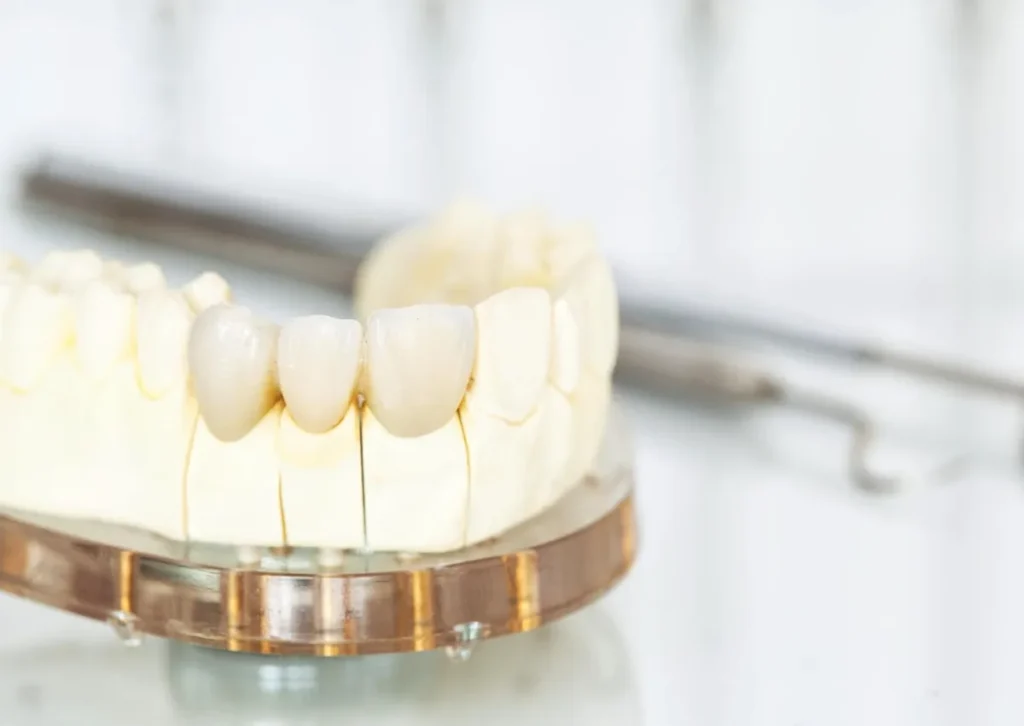
Dental crowns generally last about 5 to 15 years, and some remain functional for more than 20 years. These are broad estimates, not expiration dates: the underlying tooth, crown material, fit, bite forces, and daily care all affect how long your crown may last.
A crown can look intact while decay develops around its edge, or it can chip while the tooth underneath remains healthy. Replacement decisions should therefore depend on an examination, not age alone.
At Walden Dental in Austin, TX, we provide same-day crowns for patients who want to restore damaged teeth efficiently. Our team can help you understand your crown options, compare suitable materials, and determine whether same-day crown treatment fits your dental needs.
Key Takeaway: Your crown’s condition matters more than its age when choosing between monitoring, repair, and replacement. Ask your dentist to assess the crown, its edges, and the supporting tooth before deciding what comes next.
Table of Contents
- How Long Do Dental Crowns Last in Practice?
- Which Crown Materials Affect Durability?
- Why Crowns Fail Even When the Material Is Strong
- How to Help Your Crown Last Longer
- Signs Your Crown Needs an Examination
- Repair, Replacement, or Monitoring: What Comes Next?
- Find the Best Path Forward for Your Crown and Your Smile
- FAQs
How Long Do Dental Crowns Last in Practice?
The commonly cited 5-to-15-year range is a planning estimate, not a guaranteed result. Decay, fracture, or loosening can require treatment sooner, while a well-fitting crown on a healthy tooth may last considerably longer.
It also helps to distinguish a crown that remains in place from one that has needed no treatment. A crown may remain usable after a small repair or recementation, but repeated problems warrant reassessment.
The key question is whether the crown still protects a tooth that can support it. Replacing the crown alone cannot resolve untreated gum disease, an unfavorable bite, or extensive damage beneath the restoration.
Which Crown Materials Affect Durability?
Material affects resistance to cracking, wear, and appearance, but it does not determine lifespan by itself. Crown thickness, remaining tooth structure, fit, bonding or cementation, and bite forces also matter.
|
Crown Material |
Main Advantages |
Important Limitations |
|---|---|---|
|
Metal alloys, including gold alloys |
Resist fracture and can perform well under heavy chewing forces |
Metallic appearance; suitability depends on the alloy and patient factors |
|
Porcelain fused to metal |
Combines a metal framework with a tooth-colored exterior |
Porcelain can chip; a metal edge may become visible as gums recede |
|
Zirconia |
High strength; often considered for back teeth and heavier bite forces |
Appearance varies by formulation; rough or poorly adjusted surfaces can wear opposing teeth |
|
Lithium disilicate, such as IPS e.max |
Natural-looking translucency; suitable for many tooth-colored restorations |
Requires appropriate thickness and case selection, particularly with heavy bite forces |
There is no universal rule that zirconia lasts a specific number of years longer than lithium disilicate. Differences in formulations, tooth location, and clinical conditions make precise material-by-material lifespan promises misleading.
Pro Tip: Ask 3 questions before choosing a material: Why is it suitable for this tooth, how does grinding affect the choice, and what repair options would be available if it chips?
Why Crowns Fail Even When the Material Is Strong
Decay at the Crown Edge
The crown itself cannot develop a cavity, but the tooth at its edge can. Plaque and frequent sugar exposure can contribute to decay that extends beneath the crown, where detection may require an examination and appropriate X-rays.
Dry mouth increases cavity risk because saliva helps clear food and neutralize acids. Tell your dentist about persistent dryness and medications that may contribute, but do not stop prescribed medication without consulting the prescriber.
Grinding, Clenching, and Uneven Bite Forces
Repeated heavy forces can chip ceramic, loosen a crown, or fracture the tooth beneath it. Back teeth generally face greater chewing forces, but front teeth can also be stressed by grinding or biting hard objects.
A crown that feels higher than neighboring teeth needs assessment. Do not assume persistent bite discomfort is something you must get used to.
Problems With the Supporting Tooth or Gums
A crown depends on the remaining tooth structure and the surrounding bone and gums. Deep cracks, extensive decay, or advanced gum disease may limit how long the tooth remains functional, regardless of crown strength.
A root canal-treated tooth can still develop decay or fracture. Lack of temperature sensitivity does not confirm that the tooth or crown is healthy.
How to Help Your Crown Last Longer
Daily care should protect the crown’s edge and reduce unnecessary stress. Focus on these habits:
- Brush twice daily with fluoride toothpaste, including along the gumline.
- Clean between teeth daily with floss or another tool recommended for your needs.
- Limit frequent sugary snacks and drinks, especially sipping them over long periods.
- Reduce frequent acidic drink exposure, which can erode exposed tooth structure around a crown.
- Avoid chewing ice, unpopped popcorn kernels, pens, or other hard objects.
- Keep dental exams at the interval recommended for your cavity and gum-disease risk.
- Ask about a professionally fitted night guard if you grind or clench your teeth.
A night guard may help protect teeth and restorations from damaging forces, but it does not eliminate grinding or guarantee that a crown will not fracture. It also needs periodic inspection for fit and wear.
Watch Out: Avoid 2 shortcuts: using household glue on a loose crown and testing it by chewing hard foods. Both can cause harm; contact your dentist and avoid chewing on that side until you receive guidance.
Signs Your Crown Needs an Examination
Arrange a dental visit if you notice:
- New or persistent pain when biting.
- Sensitivity that persists, worsens, or starts after a symptom-free period.
- A loose crown or a bite that suddenly feels different.
- A chip, crack, or sharp edge.
- Floss that repeatedly catches or shreds around the crown.
- Food trapping, persistent bad taste, or gum irritation around the tooth.
These signs do not always mean replacement is necessary. For example, a dark line near a porcelain-fused-to-metal crown may be an exposed metal edge rather than decay, but an examination is needed to distinguish the causes.
Seek prompt dental care for severe or worsening pain, swelling, drainage, or fever. Facial or neck swelling with trouble breathing or swallowing requires emergency medical care.
If a crown comes off, save it and contact your dentist promptly. Avoid chewing on the exposed tooth, and do not assume an intact-looking crown can safely be reattached without evaluation.
Repair, Replacement, or Monitoring: What Comes Next?
An older crown that is stable, functional, and free of disease may only need monitoring. Depending on the findings, a dentist may be able to polish or repair a small chip, recement a suitable loose crown, or recommend replacement.
Replacement may be needed when decay undermines the tooth, the crown is significantly fractured, or its fit no longer protects the tooth. If the tooth has a deep fracture or too little healthy structure, replacing the crown may not be enough to save it.
If replacement is appropriate, same-day crowns may be an option for some teeth. Suitability depends on the tooth’s condition and treatment needs.
Find the Best Path Forward for Your Crown and Your Smile

Before treatment, ask for an explanation of the findings and a written estimate. Costs depend on the material, the tooth’s condition, and any additional treatment; a repair may be less involved than replacement but is not always appropriate or durable.
If you have dental insurance, ask your plan to verify replacement-frequency limits, exclusions, and estimated benefits. A plan’s replacement interval is a benefit rule, not a clinical expiration date, and estimated coverage is not a payment guarantee.
If you are changing dentists, request available records showing when the crown was placed, its material, and relevant prior X-rays. Comparing past and current findings can help clarify whether monitoring or treatment is appropriate.
Choosing a dental crown that balances appearance, strength, and cost can help you protect your tooth and maintain your oral health. A dental evaluation can clarify which material is appropriate and whether same-day crown treatment is an option for you. Contact Walden Dental for same-day crowns in Austin, TX. Call +1 512-337-8560 to discuss your treatment options and schedule a consultation.
FAQs
Should a crown be replaced after 10 years?
Not automatically. A crown that fits well and protects a healthy tooth may remain serviceable, while a newer crown with decay or structural damage may need treatment.
Can a crown last a lifetime?
Some crowns function for decades, but lifetime service cannot be promised. Changes in the tooth, gums, bite, and cavity risk can affect a crown long after placement.
Is zirconia always better than porcelain?
No single material is best for every tooth. Zirconia is itself a ceramic and offers high strength, while other ceramics may offer aesthetic advantages in some situations. Your dentist should weigh appearance, available tooth structure, and bite forces.
Does pain under a crown mean it must be replaced?
Not necessarily, but persistent or worsening pain needs evaluation. Possible causes include bite problems, decay, cracks, or inflammation or infection involving the tooth; treatment depends on the cause.