
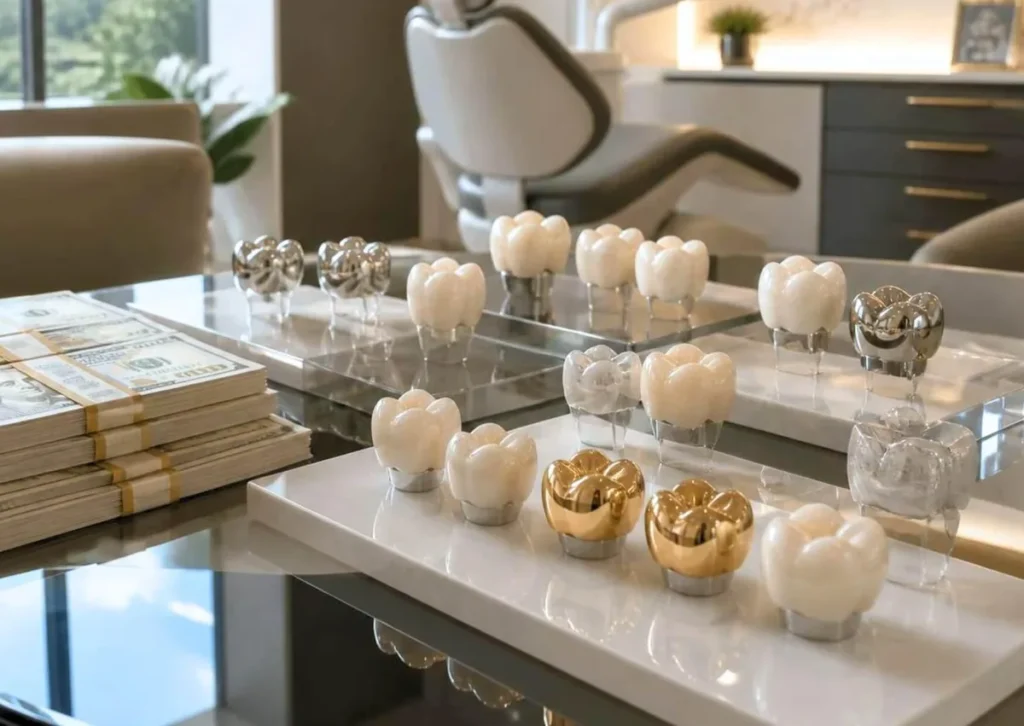
The main types of dental crowns are glass-ceramic, zirconia, porcelain-fused-to-metal, and full metal, including gold alloys. The right choice depends on the tooth’s condition, appearance goals, and chewing forces; your total cost also depends on supporting treatment and insurance benefits.
Compare suitable materials using an exam and an itemized estimate rather than an advertised crown price alone.
If you need a crown and are weighing treatment time alongside material and cost, same-day crowns may be an option for your tooth. At Walden Dental in Austin, TX, you can discuss whether in-office fabrication fits your needs and what your treatment estimate includes.
Key Takeaway: Your best crown option balances appearance, durability, and how much healthy tooth remains; not price alone. Ask your dentist to compare suitable materials and separate the crown fee from supporting procedures and your estimated insurance payment.
Table of Contents
- When Does a Tooth Need a Crown?
- Types of Dental Crowns and Cost Considerations
- What Determines the Full Cost of a Dental Crown?
- How Does Dental Insurance Affect Your Payment?
- How Should You Choose a Crown Material?
- What Happens During Crown Treatment?
- How Can You Protect Your Crown Investment?
- Protect Your Tooth With Confidence in Your Crown Treatment
- FAQs
When Does a Tooth Need a Crown?
A crown covers the prepared portion of a tooth above the gumline to restore its shape and function. It may help protect a tooth weakened by a large cavity, a fracture, extensive fillings, or root canal treatment.
Damage does not automatically mean a tooth needs a crown. Depending on the amount and location of damage, a filling, an onlay that covers part of the tooth, or another treatment may preserve more healthy tooth structure.
Crowns also restore dental implants and can form part of a bridge that replaces missing teeth. Those treatment plans have different components and costs from a crown placed on a natural tooth.
Types of Dental Crowns and Cost Considerations
Crown material affects appearance, strength, tooth preparation, and fabrication. It does not determine a universal price, and the same material may cost different amounts depending on the tooth and treatment plan.
|
Crown Type |
Main Advantages |
Important Trade-Offs |
What to Clarify About Cost |
|---|---|---|---|
|
Glass-ceramic, such as lithium disilicate |
Toothlike translucency; useful when appearance matters |
Suitability depends on bite forces, material thickness, and bonding conditions |
Whether shade matching and custom laboratory work are included |
|
Zirconia |
High strength; available in different shades and translucencies |
Strength and appearance vary by formulation; careful polishing after bite adjustment matters |
Which zirconia formulation and finishing services the quote covers |
|
Porcelain-fused-to-metal, or PFM |
Metal support with a tooth-colored porcelain surface |
Porcelain can chip; a metal edge may become visible if gums recede |
How alloy selection and layered porcelain work affect the fee |
|
Full metal, including gold alloys |
Durable; may require less material thickness than some alternatives |
Metallic appearance; alloy ingredients matter for patients with sensitivities |
How precious-metal content and laboratory charges affect the fee |
|
Resin-based crowns |
Useful for temporary restorations and selected clinical situations |
Generally less resistant to wear and fracture than definitive ceramic or metal options |
Whether the quote is for a temporary or definitive crown |
“Porcelain” and “ceramic” are sometimes used loosely in treatment discussions. Ask for the specific material so you can compare like-for-like estimates from different offices.
No verified local fee schedule is provided here, so assigning dollar ranges could misrepresent your likely cost. An examination and written estimate are needed to establish the options and fees for your tooth.
Pro Tip: Ask 3 questions about each suitable material: Why does it fit this tooth, what is its main limitation, and does choosing it change my estimated out-of-pocket cost?
What Determines the Full Cost of a Dental Crown?
The crown may be only one part of restoring the tooth. An examination and appropriate X-rays help identify decay, cracks, gum problems, and whether enough healthy teeth remain to support the restoration.
Your estimate may include or separately list:
- Examination and diagnostic imaging.
- Removal of decay or an existing restoration.
- A core buildup to replace missing tooth structure.
- A post in selected root-canal-treated teeth when needed to retain the buildup.
- Root canal treatment if the tissue inside the tooth requires treatment.
- Gum treatment or crown-lengthening surgery when clinically necessary.
- A temporary crown, fabrication, final placement, and follow-up adjustments.
Not every tooth needs these procedures, and a root canal is not a routine requirement for getting a crown. A post helps retain a buildup in selected cases; it does not strengthen the root.
Location, clinician and laboratory fees, case complexity, and specialist involvement also influence cost. For an implant crown, clarify whether the estimate covers only the crown or also the connecting abutment, implant surgery, and any bone grafting.
To compare estimates, separate the total treatment fee, estimated insurance payment, and estimated amount you will owe. Confirm whether each estimate covers the same tooth, material, and supporting procedures.
Watch Out: Compare 2 parts of every estimate: what is included and what could be added if treatment needs change. A lower crown-only quote may not mean a lower total treatment cost, so ask how additional findings would be discussed and priced.
How Does Dental Insurance Affect Your Payment?
Dental plans may cover part of a medically necessary crown, but no coverage percentage applies to everyone. Your payment can depend on deductibles, annual benefit limits, network status, waiting periods, replacement restrictions, and the material the plan uses to calculate benefits.
Some plans calculate payment using a less expensive covered alternative even when you choose another material. Coverage for an implant crown may also differ from coverage for a crown on a natural tooth.
Before scheduling, ask the dental office and insurer to verify:
- Whether the proposed crown and supporting procedures are covered.
- Whether a waiting period or prior-crown replacement limit applies.
- How much of your annual benefit remains.
- Whether your chosen material creates an additional patient charge.
- Whether a pretreatment estimate is available.
You can also review Walden Dental’s insurance options before discussing your benefits with the office.
A pretreatment estimate helps with planning but is not a payment guarantee. Ask about payment policies and any financing terms, including interest and fees, before agreeing to a payment arrangement.
How Should You Choose a Crown Material?
Start with the tooth’s clinical requirements, then compare appearance and cost among suitable options. A front tooth may place greater emphasis on translucency and shade matching, while a back tooth exposed to heavy chewing forces may require a different balance.
Your dentist should also consider remaining tooth structure, available space, gum health, bite alignment, and grinding or clenching. The opposing teeth matter because crown surface roughness and bite contacts can contribute to wear.
Share any known metal allergies, previous crown problems, and appearance priorities. Ask why the recommended material fits your tooth and whether another suitable option changes the treatment or cost.
If you seek another opinion, request available X-rays, relevant treatment records, and the proposed material. This helps keep the comparison focused on the same tooth and treatment needs.
What Happens During Crown Treatment?
- Evaluate the tooth. Your dentist checks whether it can be predictably restored and discusses alternatives, materials, and costs.
- Prepare and record the tooth. After appropriate numbing, the tooth is shaped, and a digital scan or impression records its form and bite.
- Protect the tooth if needed. A temporary crown may be used while a laboratory makes the final crown; some offices can fabricate suitable crowns in-office.
- Check and place the crown. Your dentist evaluates fit, contacts, appearance, and bite before cementing or bonding it.
The number of visits and overall timeline depend on the fabrication method and whether other treatment is necessary. Same-day fabrication, including one visit CEREC crowns, is an option for selected cases; not proof that one material or workflow is better for every tooth.
Some sensitivity or gum tenderness can occur after treatment. Contact your dentist if pain persists, worsens, disrupts sleep, or occurs when biting, or if the crown feels loose or your bite feels uneven.
How Can You Protect Your Crown Investment?

A crown cannot develop decay, but the tooth beneath its edge can. Brush with fluoride toothpaste, clean between teeth daily, and attend dental visits at an interval recommended for your cavity and gum-disease risk.
Avoid chewing ice or using teeth to open packaging. If you grind or clench, ask whether a professionally fitted night guard would help protect your teeth and restorations.
Crown longevity varies with the underlying tooth, fit, material, bite forces, and home care; a fixed replacement date is not reliable. Seek prompt dental care for a loose crown, new swelling, or worsening pain.
Facial or neck swelling with trouble breathing or swallowing requires emergency medical care.
Protect Your Tooth With Confidence in Your Crown Treatment
A well-planned crown decision accounts for both the initial bill and the care needed to keep the tooth healthy. Before proceeding, make sure you understand why the crown is recommended, which materials are suitable, and what your written estimate includes.
An exam can help you understand whether a same-day crown is suitable and what your treatment may cost. To discuss same-day crowns with Walden Dental in Austin, TX, call +1 512-337-8560 or schedule an appointment.
FAQs
Which type of dental crown is best?
There is no single best material for every tooth. The appropriate choice depends on appearance goals, chewing forces, remaining tooth structure, and the conditions needed to secure the crown.
Are gold crowns always more expensive than ceramic crowns?
Not necessarily. Gold-alloy content, laboratory fees, ceramic fabrication, and local fees can change the comparison, so request estimates for the options appropriate for your tooth.
Does every crowned tooth need a root canal?
No. Root canal treatment addresses disease or injury involving the tissue inside the tooth, while a crown restores and protects the tooth’s outer structure.
Can I delay a crown to save money?
Ask your dentist about the risks of delaying treatment and whether a temporary or more conservative option is reasonable. A weakened tooth can fracture further, potentially changing both your treatment options and the total cost.